Greenside Bunker Basics: Setup and Splash
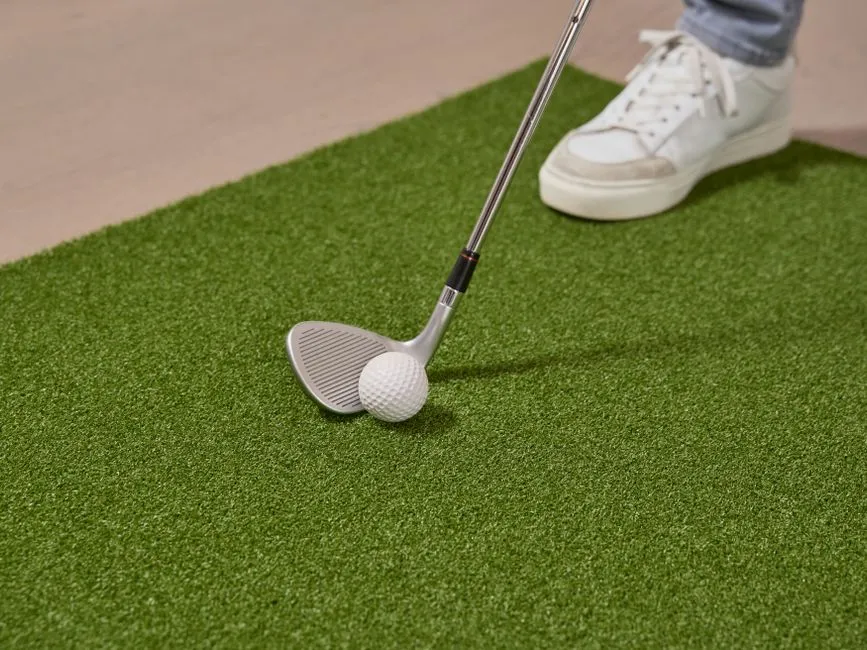
A greenside bunker shot splashes sand
A standard greenside bunker shot uses the club's bounce and speed to move a shallow layer of sand, carrying the ball out with that sand. Set the face and stance according to the lie, enter the sand before the ball, and keep moving through. The exact entry point and setup vary with sand, lip, club, and technique.
Before practicing, check the bunker is open, the range is clear, and nobody stands where sand, ball, or club can reach them.
Read the lie before opening the face
A clean ball sitting on soft sand supports a standard splash. A buried lie, firm wet sand, downslope, upslope, or high lip changes the plan. Do not automatically open the face wide for every lie.
Choose enough loft to clear the lip and a landing area with room for rollout. When the lie is severe, prioritize getting out safely over finishing beside the flag.
The chip-versus-pitch guide helps compare trajectories outside sand, but bunker contact is its own technique.
Build a stable splash setup
For a standard shot, widen the stance modestly, settle the feet for traction without excessive digging, and favor pressure toward the lead side. Open the clubface as needed before taking the grip so the handle does not simply twist back during the swing.
Aim body and face according to the planned open-face shot. Alignment relationships depend on technique, so use a qualified coach if the ball repeatedly starts outside the intended safe target area.
Enter the sand with speed
Make a committed swing that strikes sand before the ball and continues to a full enough finish. The club should skim rather than dig deeply when the lie and bounce allow. Decelerating can leave the ball in the bunker; trying to pick it clean can send it far over the green.
Listen for a broad splash and inspect the divot. A very deep narrow trench suggests excessive digging; no sand before the ball suggests a picked or thin strike.
Draw a line for entry practice
On a practice bunker where rules allow, draw a line in the sand. Make swings that enter on the line and splash sand forward, first without a ball. Then place balls a short distance ahead of the line and repeat.
Smooth the bunker afterward according to facility practice. Remove deep trenches because they can create unstable footing for the next player.
Control distance with swing and setup
For longer bunker shots, a longer swing, less-open face, or different club may help; for shorter shots, more loft or a shorter motion may fit. Do not slow down abruptly. Preserve commitment and change the size or tool.
Use wedge distance practice for carry awareness and include sand in the 30-minute routine only at an approved bunker.
Respect firm or buried lies
Firm sand can make excessive bounce contact the surface and produce a thin shot. A buried lie may call for a different face and entry pattern. These strikes can load the hands, wrists, and elbows abruptly. Practice them with a qualified coach, stop immediately if pain occurs, and obtain clinical guidance before resuming after an injury.
If footing is unstable or the bunker edge is unsafe, do not force a swing. Check the rules applying to the round and choose an allowed option from stable ground.
Before every rehearsal or shot, confirm that nobody is inside the full clubhead arc or likely ball path. Confirm the landing area is clear, and never swing or hit while anyone is in range.
Stop immediately if force, rotation, or repetition causes pain, numbness, tingling, weakness, dizziness, or loss of control. Persistent, recurring, or concerning symptoms require assessment by a qualified clinician; a qualified golf coach can review technique only after the immediate health concern is addressed.