Golf Takeaway Drill for a Connected Start
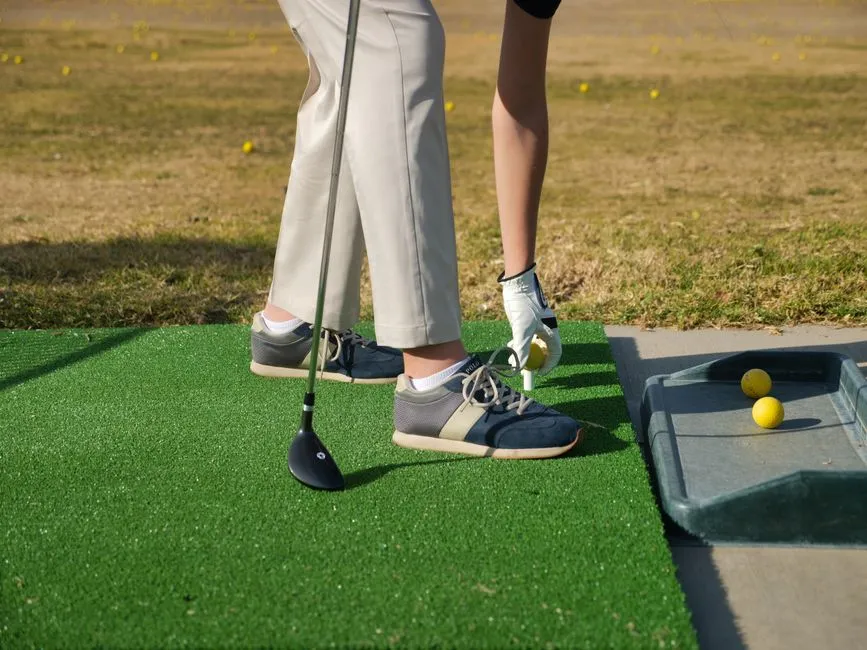
Start the club without snatching it inside
A useful golf takeaway moves the club, hands, arms, and torso away in a coordinated first segment while preserving balance and awareness of the clubface. It need not be a rigid “one-piece” block. The goal is a repeatable start that gives the backswing room, not a sudden hand roll or shoulder heave.
Practice slowly with a short iron and no ball first. Confirm that nobody is inside the full clubhead arc before every rehearsal.
Use the club-across-the-chest rehearsal
Hold a club across the chest with arms folded and take a balanced address posture. Turn the chest away from the target while pressure remains supported inside the feet. Notice that the hips can respond without sliding dramatically.
Then use the grip guide to hold the club normally and reproduce that turn while the arms stay in front of the torso. Do not freeze the wrists; they can begin responding naturally as the club gains length and momentum.
Build a checkpoint at shaft-parallel
Move until the shaft is roughly parallel to the ground. The hands should remain organized in front of the chest rather than pulled far behind, and the clubhead should not be whipped dramatically inside. Clubface appearance varies with grip and camera angle, so evaluate the checkpoint with ball flight and a qualified coach rather than relying on one image.
Pause, return to address, and repeat five times. The pause is a learning tool; the real swing will flow through.
Try the headcover gate
Follow range rules before placing any object. Use only a soft headcover, keep every person clear, and position it so neither the club nor a ricochet can send it toward another player. Place it just behind the clubhead on the target line, then nudge it away gently for a short distance.
Remove the headcover before making a longer rehearsal or adding a ball.
Continue into the backswing guide once the start feels coordinated. If pushing the headcover makes you sway, shorten the drill.
Add a ball with half-swings
Hit five waist-high shots at a wide target. Record strike and start direction. If contact improves, keep the feel. If the ball starts offline or the face feels unstable, inspect grip and alignment before making the takeaway more exaggerated.
Use tempo drills to blend the start into the rest of the motion while preserving balance and club control.
Diagnose common errors simply
If the club whips inside, feel the chest and hands moving together toward the shaft-parallel checkpoint. If it lifts steeply outside, let the arms remain connected to the turning torso without pinning them to the ribs. If the body sways, shorten the motion and retain pressure inside the trail foot.
Change one cue and hit a group. The best takeaway cue completes its job early and does not compete with balance, contact, or target awareness during the rest of the swing.
Before every rehearsal or shot, confirm that nobody is inside the full clubhead arc or likely ball path. Confirm the landing area is clear, and never swing or hit while anyone is in range.
Stop immediately if force, rotation, or repetition causes pain, numbness, tingling, weakness, dizziness, or loss of control. Persistent, recurring, or concerning symptoms require assessment by a qualified clinician; a qualified golf coach can review technique only after the immediate health concern is addressed.