Putting Distance Control: Train Start Speed
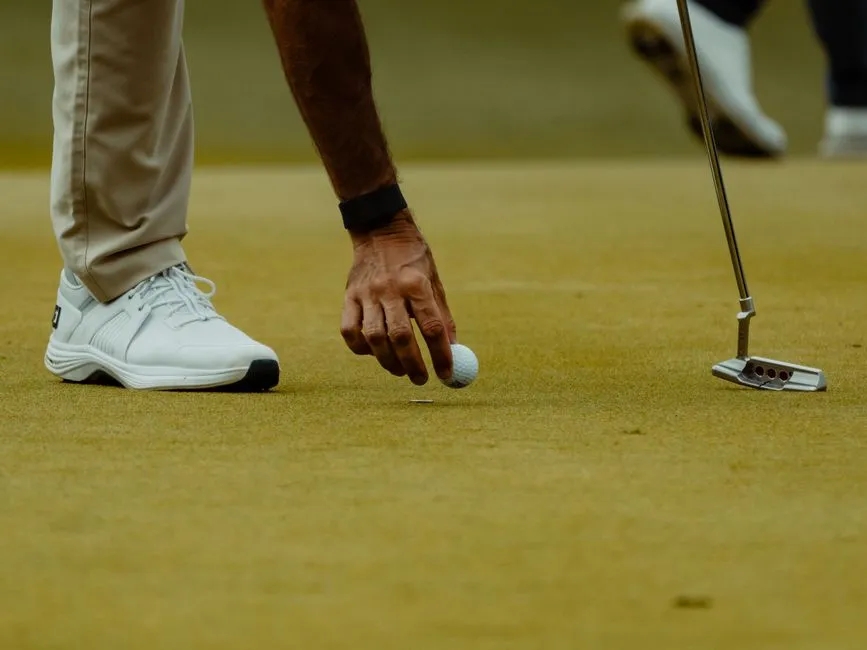
Distance control begins with start speed
Putting distance control means launching the ball with enough speed for the chosen line and slope, then predicting how quickly it loses that speed. The hole does not pull the ball in. Pace and line work together: a firmer putt breaks less, while a softer putt generally needs more allowance.
Practice finish zones instead of demanding every long putt fall. Use an open practice area, keep nearby players clear of the putter arc and intended roll, and respect their lines. Stop for back, neck, wrist, or shoulder pain. Have persistent or concerning symptoms assessed by a qualified clinician before a qualified golf coach reviews technique.
Build a ladder without a target hole
Place three markers at increasing distances on a flat section of green. For a concrete starting tolerance, set a second soft marker one putter-length beyond each target and score a ball when it stops between the target and that boundary without striking either marker. Roll one ball to each gate, note short or long, then repeat the ladder in reverse. Widen or narrow the gate after a complete round to match current control.
Use the same putting setup and let stroke length respond to distance. Avoid hitting harder with a sudden hand jab.
Calibrate the green that day
Before a round, roll putts uphill and downhill from a middle distance. Observe how far the same comfortable stroke travels. Practice greens may differ from course greens, but this establishes a current feel.
Weather, moisture, mowing, grain where relevant, slope, and green firmness can all change pace. Recalibrate on the surface available that day rather than assuming yesterday's stroke will travel the same distance.
Use a leapfrog drill
Roll the first ball to any safe open distance. Try to finish the second just beyond it, then the third just beyond the second without striking another ball. Continue until space runs out, then reverse direction.
This trains relative speed and attention. Set balls where they will not interfere with other players, and follow practice-green rules.
Pair pace with a finish zone around the hole
From several long locations, place four low, soft markers one putter-length from the cup to create a visible finish zone where facility rules allow. Score one point for finishing inside and a bonus for holing. Move the station to change slope and direction after each putt, and remove every marker when finished.
The aim is a manageable second putt, not a perfect first result. Track how often the ball finishes short, long, or on the low side. Those patterns guide the next practice block.
Read before you roll
Use the green-reading process to identify uphill, downhill, and side slope. Decide intended finish speed before selecting the start line. If you change pace during the stroke, the read never got a fair trial.
For short putts, start line may dominate attention; for long putts, speed often deserves more practice time. Both still matter.
Practice one ball and a routine
End with nine different putts using one ball. Read, rehearse, set up, roll, and hole out. Record first-putt finish distance and whether the next putt was made.
Include this game in the 30-minute practice. Give every putt its own read, intended finish speed, start line, and recorded result so the next attempt begins with a fresh decision.
Before every rehearsal or shot, confirm that nobody is inside the full clubhead arc or likely ball path. Confirm the landing area is clear, and never swing or hit while anyone is in range.
Stop immediately if force, rotation, or repetition causes pain, numbness, tingling, weakness, dizziness, or loss of control. Persistent, recurring, or concerning symptoms require assessment by a qualified clinician; a qualified golf coach can review technique only after the immediate health concern is addressed.